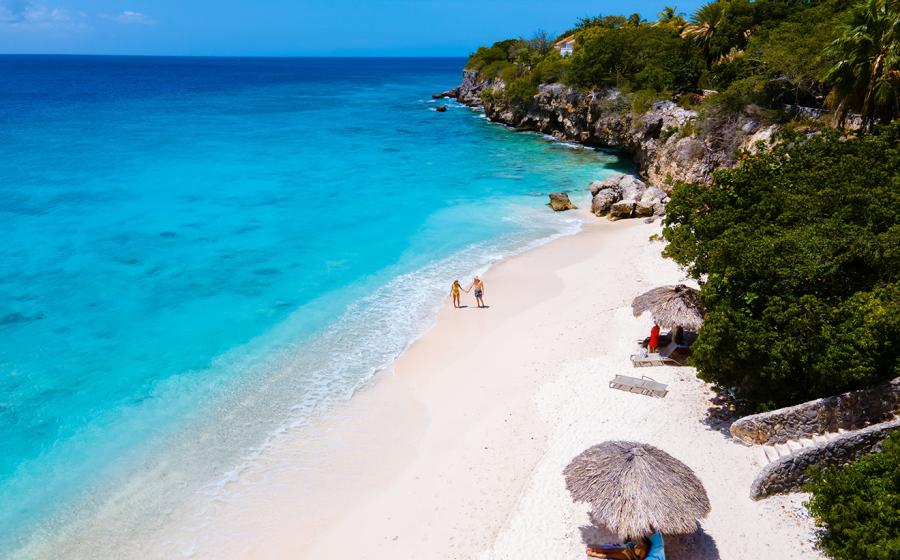
Beach and cove at La Caleta de Caucedo
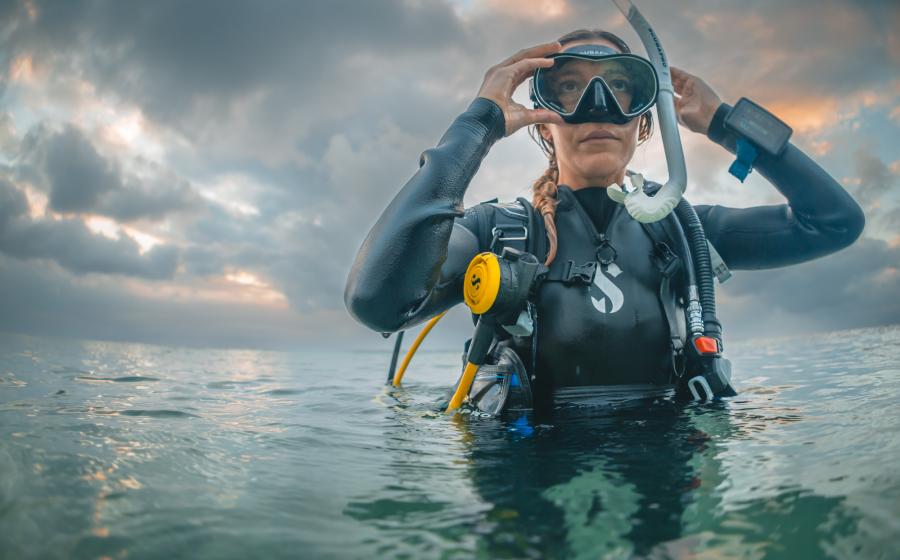
The beach area and shallow cove at La Caleta de Caucedo where artifacts from the Nuestra Señora de Begoña are being uncovered. Indiana University and the Dominican Republic Ministry of Culture hope to locate the shipwreck itself, and protect the site by establishing a Living Museum of the Sea.Under a blazing-hot sun in the Dominican Republic, a team of Indiana University underwater archaeology professors, students and U.S. Peace Corps volunteers enter the water. Their goal: to recover artifacts spilled in shallow water when the 90-ton Spanish merchant vessel Nuestra Señora de Begoña broke apart 287 years ago.
In May 1725, the Begoña was en route from Caracas, Venezuela, to Tenerife in the Canary Islands. The ship’s manifest showed a cargo of cacao, hardwood and roughly 9,000 pesos. When the Begoña encountered rough weather near Santo Domingo, the captain beached the ship near La Caleta de Caucedo. The crew was safe, but after the Spanish colonial government investigated, it discovered the crew had attempted to conceal 21,000 pesos, more than twice the amount listed on the manifest. The captain was sentenced to three years in prison for smuggling silver.
The researchers scoured the sandy shallows at La Caleta National Marine Park for Begoña’s artifacts. “To date, no one has found the actual shipwreck,” says Charles Beeker of Indiana University’s Department of Underwater Science. Indiana University has been issued a government permit to find the Begoña and protect the area as a “living museum in the sea.”
“I was absolutely shocked by what we have discovered so far,” says Beeker. “In no more than 15 feet of water, we found a cannon, solid-silver platters, candlestick holders, forks, spoons, pottery shards and two talegas — or bags — of silver coins.
“These objects serve as a porthole into the early 18th century, telling us about the people on board the Begoña, as well as the colonization and international commerce of the time,” says Beeker.